
26 beautiful color combinations that’ll inspire your next design
From contrasting colors to colors that match, here are 26 of the best color combinations to inspire your next design, including classic and trending color combos.
1. Blue & pastel pink

Combining blue and pastel pink creates a nice balance. Pink’s softer, spring-like pastel aesthetic alongside blue’s hints of sophistication creates a serene-like duality of balance and harmony. These contrasting colors evoke refined, feminine tranquility, ideal for beauty, health, and wellness brands.
Hex codes: #2F3C7E, #FBEAEB
2. Dark charcoal & bright yellow

Dark charcoal and bright yellow form a visually striking, high contrasting color combination. Paired together, these colors feel energetic and contemporary, making the ideal color palette for cutting-edge design agencies, dynamic athletic and sportswear, and urban lifestyle brands.
Hex codes: #101820, #FEE715
3. Light red & yellow

The bold and vibrant color combination of light red and yellow is the embodiment of cheer. Reimagine this classic ketchup and mustard color pairing with a modern, pastel take by changing the tints from red to coral for children’s logos and branding and youth-focused food and beverage packaging.
Hex codes: #F96167, #F9E795
4. Cherry red & off-white

Cherry red and off-white are truly versatile classics. Defined by its duality, classic and timeless, elegant and inviting, this color combination is ideal for luxury fashion and accessories brands, fine dining and hospitality industries, and romantic and bridal branding.
Hex codes: #990011, #FCF6F5
5. Baby blue & white

Another classic color combo is baby blue and white. This serene combo communicates ease and trustworthiness, invoking the feeling of looking up at the sky on a sunny morning. Baby blue and white is the perfect color combo for brand colors in the healthcare, childcare, or non-profit industries.
Hex codes: #8AAAE5, #FFFFFF
6. Dark blue & light blue

Don’t overlook different shades of color in this the light and dark blue combo. Authoritative and cultivated, this monochrome color combination inspires professionalism and trust — making it an excellent color palette for insurance agencies or financial services firms.
Hex codes: #00246B, #CADCFC
7. Sky blue & bubblegum pink

A popular classic color combination, sky blue and bubblegum pink is a playful and bright combo that communicates adolescent joy. These bright colors are ideal for parenting brands, childcare logos, children’s apparel, products, and toys.
Hex codes: #89ABE3, #EA738D
8. Cherry red & bubblegum pink

Cherry red and bubblegum pink come together to form a fun analogous color combination. Paired, these colors create quite a gorgeous visual contrast, making an ideal color palette for bold and expressive beauty and lifestyle brands and products.
Hex codes: #CC313D, #F7C5CC
9. Forest green & moss green

Forest and moss green form a monochromatic color scheme, embodying the outdoors and nature sentiments ideal for eco-friendly and sustainable products or brands, outdoor apparel and gear brands, nonprofits, and cooperatives.
Hex codes: #2C5F2D, #97BC62
10. Midnight blue, royal blue, & burgundy red

Midnight blue, royal blue, and burgundy red combine to create a visually commanding color scheme. Mysterious, intriguing, bold, and luxurious, this combination evokes a passion and authority ideal for high-end fashion and jewelry, luxury cars and spirits, fine dining, boutique hotels, perfume, and cosmetics.
Hex codes: #1E2761, #408EC6, #7A2048
11. Terracotta red, light beige, & muted teal

Terracotta red, light beige, and muted teal combine to create a mesmerizing and mysterious color combination. This earthy and neutral color palette draws great appeal to the eye. This beautiful, timeless color palette is fantastic for farm-to-market brands and restaurants, home decor and interior design agencies, outdoor apparel and gear brands, and botanical wellness brands or products.
Part Five – What is a modern color palette?
Well, I’ll tell you one thing a modern color palette is not using super simple versions of the colors we traditionally think of: blue, green, yellow, etc. Regardless of if you can make simple colors look good together or not – it seems unsophisticated and relatively bland. I remember my painting teacher in college saying always to mix your paints with intention at the beginning of a session – because people who just squeeze them out of a tube are going to find the look of their painting drab indeed.
What we want is a modern color palette that appeals to the refined tastes of today’s consumer. It can be bold and fresh, or earthy and rusty – but it should never look haphazard.

Dark Blue/Purple: #111c30
Dark Pink Makeup: #9a4d55
Comfortable Couch Beige: #80756b

Tiny Sweet Blue: #b5e9e9
Creamy Light Tan: #fef6dd
Pinkie Pie: #ffe1d0
Yellow Horse: #fff1b5
Green Thumb: #dcf3d0

Deep Purple: #1d1145
Trapper Keeper Green: #0db4b9
Pink Boot: #f2a1a1
Modern Pink Backpack: #e76d89

Red branches: #de493c
Green Trees: #608074
Blue/Green Mist: #daefd9
5 of the Best Website Color Scheme Generators to Get You Started
There are obviously a lot of choices to choose from when it comes to the colors you choose for your website. Lucky for you, some great online color scheme generators can help you find the perfect fit for you.
Flat UI Colors

With an easy click-to-copy feature, you can paste the HEX codes the existing color schemes they already have available.
Color Supply

With the option to choose from complementary, analogous, triad, split-compliment, and square color combinations, this fun tool allows you to explore numerous color options and helpful images below the color wheel to help you visualize each color combo.
Coolers

If you want to get extremely detail-oriented with your color schemes, then check out the Cooler app, which allows you to get very technical with your colors for a highly-customizable web color scheme.
Palette Generator

The Palette Generator is an awesome way to help turn your favorite landscape, cityscape, or any photo into a color scheme. Easily upload a picture, and this tool does the rest.

Another tool that allows for highly customizable colors; Paletton is a great app for expanding your color scheme repertoire.
62 percent of businesses polled said they believe a web site should be re-designed every 2-3 years! Source: Hook Agency
Цветовое пространство RGB
RGB цветового пространства или цветовая система RGB , создает все цвета из комбинации R Е.Д., G Reen и B LUE цвета.
Красный, зеленый и синий используют по 8 бит каждый, которые имеют целочисленные значения от 0 до 255. Это дает 256 * 256 * 256 = 16777216 возможных цветов.
RGB ≡ красный, зеленый, синий
Таким образом, каждый пиксель на светодиодном мониторе отображает цвета за счет комбинации красного, зеленого и синего светодиодов (светоизлучающих диодов).
Когда красный пиксель установлен на 0, светодиод выключен. Когда красный пиксель установлен на 255, светодиод будет полностью включен.
Любое значение между ними устанавливает частичное излучение светодиода.
First, let’s look at color theory and the color wheel
To understand why certain color combinations work so well, we first have to consider color theory and the color wheel. Color theory feeds into color psychology, which digs into how our brains perceive color. The color wheel helps you visualize relationships between colors, putting color theory into practice.
Let’s break it down below.
Color theory
Color theory is the art and science of using color. Research has shown that color has a psychological impact on human emotions, perceptions, and behaviors. For artists and designers, color theory unlocks color mixing and color schemes, serving as a collection of rules and guidelines that designers use to communicate with and appeal to an audience.
Pro Tip: Check out our beginner’s guide on color theory or color in design guide for a deeper dive into the study.
Color wheel
Part of these rules and guidelines make up the color wheel — designed by Sir Isaac Newton in 1666. Sir Isaac intimately understood how color was defined by human perception and how it came together to create eye-catching combinations.
The color wheel is a powerful tool for visualizing the relationships between colors, thus putting color theory into practice. Sir Isaac’s experiments with prisms led to his eventual discovery of the primary, secondary, and tertiary color categorizations:
- Primary colors: red, yellow, blue
- Secondary colors (created by mixing primary colors): orange, green, violet
- Tertiary colors (created by mixing both primary and secondary colors): red-orange, yellow-orange, yellow-green, blue-green, blue-violet, red-violet
Human perception defines color. Our relationship with colors, psychologically and collectively, is what gives meaning to color; that meaning creates iconic and successful branding (think red and white for Coca-Cola). By understanding the color wheel and categories, you can better create color combos that look good together.

To familiarize yourself with the color wheel, imagine a vertical line through the center of the wheel. Notice the distinction between warm colors (reds, oranges, and yellows) and cool colors (blues, greens, and violets). Warm colors embody a brightness or warmth, whereas cool colors convey a calmness or, well, cool effect.
Complementary color combinations are the pair of colors positioned opposite to each other on the color wheel. These contrasting colors catch the eye and leave quite an impact — examples: red and green, yellow and purple, orange and blue.
Analogous color combinations refer to any two to five colors adjacent to each other on the color wheel. These combinations create a sense of balance and harmony. Typically, one of these colors will be more dominant and sit in the foreground, while the other color will sit in the background — examples: yellow, yellow-green, and green; violet, red-violet, and red; red, red-orange, and orange; blue, blue-violet, and violet.
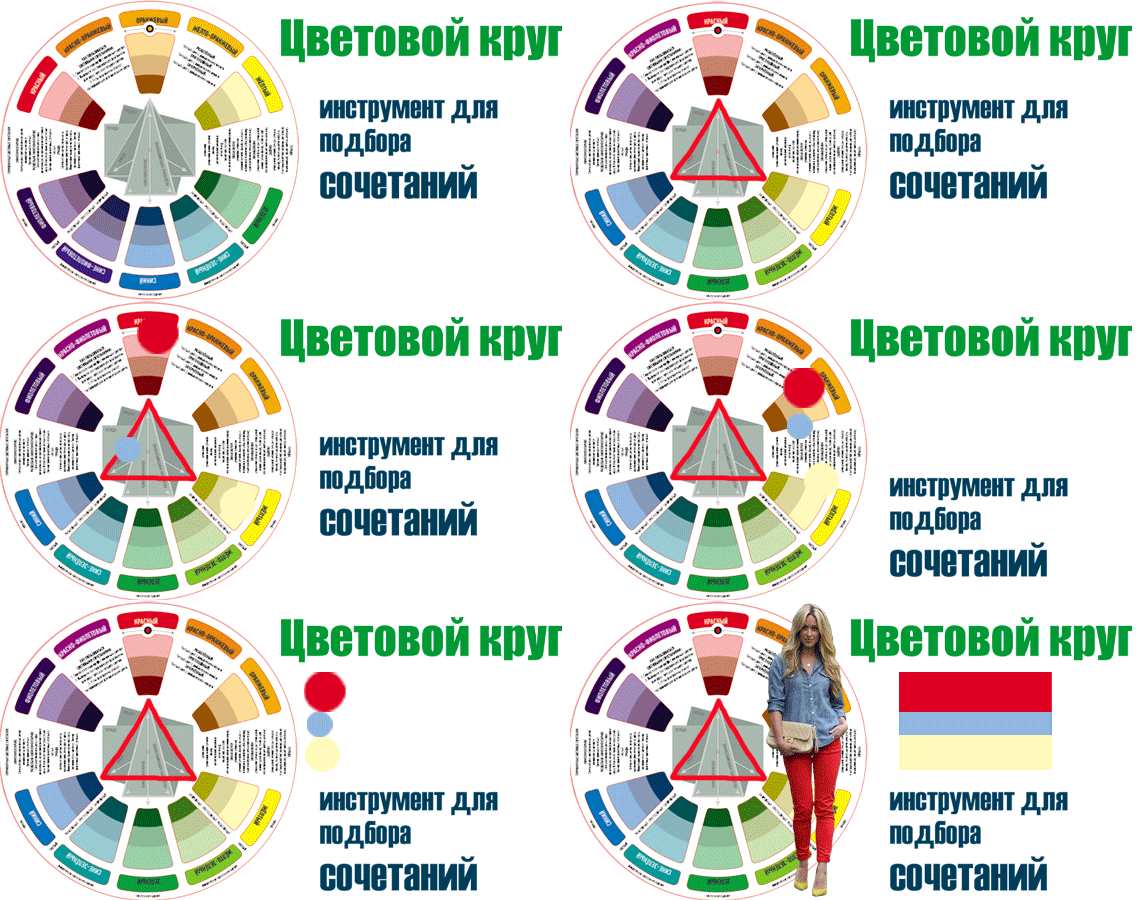
- Triadic color combinations select three evenly spaced colors throughout the color wheel. These combinations tend to be vibrant, creating a dynamic and harmonious visual contrast when combined. You can find your three triadic colors by creating a triangle on the color wheel — examples: red, yellow, and blue; green, orange, and blue-violet; red-orange, yellow-green, and blue-violet.
- Tetradic color combinations use four colors spaced evenly on the color wheel to form a square or rectangle — examples: Red, yellow-green, light blue, purple; magenta, green-yellow, blue-green, and indigo.
Understanding universal perceptions and color’s relationship with us is essential to becoming a great artist or designer. Its communicative nuances, subtle and near-innate, are a language of its own, vibrant and elusive.
Further research the color wheel to cement your understanding of the art and science of color, and consider playing around with color palette generators.
A few words of encouragement
Using descriptive words like ‘masculine,’ ‘feminine,’ ‘rugged,’ ‘classic,’ ‘clean,’ ‘modern,’ and ‘expressive,’ can help you talk about color schemes and typefaces with your clients and others working on your design with you. It’s important not to get caught up in the semantics – or meanings of the words – too strictly. Rather, use them as they are useful to you and discard them as soon as they become contentious.
The crucial piece is that your designs serve the purpose that they are intended for – that they are effective. By taking some time to start projects with a color scheme that meets the emotional needs of the prime demographic, you are setting them up for success. At it’s most basic level, that means not making a website for men purple as it’s statistically their least preferred color. You also wouldn’t want to make a medical website black as it connotates death, or giving a very light and airy yellow color scheme for a serious subject lest it insinuates frivolity.
At it’s most acute, intention in a web design color scheme means communicating the brand voice, the emotional appeal, occasionally being open to things previously learned by others (green for an environmental project, blue for a technology project, red for sports and aggression,) and following your instinct as you dive headfirst into what would truly speak to this particular market. The greatest designers were all guessing, too, and took a stab at something new. Jump in, soak up what’s already out there in the particular market the product or service is in. Then, look at the most visually appealing and effective designs in all markets and try your hand. After you’ve tried some pre-mixed hex color schemes listed above or elsewhere – mix up your own.
Recognize your hidden powers, trust your creative instincts, and get your hands dirty.
Types of color combinations
The color wheel provides a foundation for exploring and experimenting with different shades in your campaigns. Some of the popular color combinations to consider include:
Monochrome color combinations
A monochrome color combination consists of varying tints, shades, and tones of the chosen hue. For example: dark blue, slightly lighter blue, and light blue. These combinations are great for simplifying busy designs and creating a harmonious, visually appealing look.
Complementary color combinations
Complementary colors exist directly across from one another on the color wheel. These colors are highly contrasting and can make your design boldly stand out with high contrast. You can find this color pairing in the logos of many well-known brands, such as McDonald’s (red and yellow) and FedEx (purple and orange).
Analogous color combinations
An analogous color combination comprises colors that neighbor each other on the color wheel. This arrangement creates a pleasing and coherent visual effect, reminiscent of the color harmonies found in the natural world.
Split complementary color combinations
The split complementary combination is a variation of the complementary color scheme. It comprises one main color and two colors symmetrically placed around it. This pairing creates a balanced mix of three hues that work together harmoniously, adding versatility to your color palette.
Triadic color combinations
Triadic color schemes are a variation of the split complementary scheme. The first color in triadic color palettes is the dominant color, and the colors that follow are accent colors. Triadic schemes often convey a sense of vibrancy and enthusiasm.
Tetradic color combinations
Similar to the triadic color scheme, the tetradic color combination involves colors that are equally spaced on the color wheel. However, tetradic combinations take it a step further by incorporating four colors instead of three. This arrangement offers a broad spectrum of colors and can evoke a sense of diversity and versatility in design.
Frequently Asked Questions about Website Color Schemes
What is the best color for a website?
Blue is definitely the safest choice since it has the highest number of people saying it’s there favorite at 35%. However – clearly, if your competitors are all using blue, it might make sense to ‘differentiate’ your offering and brand. Your brand colors should be appealing, and ‘white space’ is an important part of that. Make sure you give space to the elements you do include, have a contrast between text and backgrounds, and don’t overwhelm the visitor – trying to be too flashy or being novel just for the sake of novelty.
How many colors should a website have?
Consider that 51% of brands choose monochrome logos, 39% use two colors, and only 19% of companies choose full-color logos. Besides photographs, 1, 2, and 3 color websites seem to be easier to pull off well than trying to make a website with a rainbow of colors. That being said – if you have a professional designer, clearly Microsoft and Google believe there’s a benefit of working with more colors as they both use at least 4 solid colors in their design.
Why might I consider hiring a professional website designer?
Choosing a color scheme is tricky – but there are far more heavy-duty problems in a website design that may benefit from the help of a seasoned designer. Professional web designers have tried 100’s of things and realized what methods do and don’t work – ideally, if you work with a team like Hook Agency they’ve also A/B tested websites, made changes based on Analytics, and know how to make your website easy to find on Google.
You’ve uncovered a secret hatch into the inner workings of the internet!
We know how to do amazing things like this very cool FAQ add-on to our listing here on Google. We know how to wield your website on Google through a practice called ‘Search Engine Optimization’ – so, beyond website color schemes, we know how to DRIVE BUSINESS from traffic. If you’d like to work with a professional web design team – send us a message now at tracy@hookagency.com!
Another tactic we use to optimize rankings is a little something called inter-linking. So if you’ve ever wondered who the sexiest man in MN is, or wanted to read a plumber SEO guide, give them a read!
Color theory explained
Color theory is the study of how colors interact and influence emotions. It is a valuable resource for brands looking to create a strong visual impact. Color theory enables you to choose a color scheme that resonates with your audience and clearly communicates your brand’s identity.
The psychology of color
Now that we’ve had an introduction to color theory, we should take a quick peek at the psychology of color.
Choosing a color combination is not about choosing the colors you like; it’s about choosing the colors that evoke the emotions you seek from your audience. This is important because the colors and hues you choose set the tone for how your customers and clients feel about your website, business cards, and/or office space.
→ Click Here to Launch Your Online Business with Shopify
Below is a quick rundown of different hues and the feelings they often elicit:
- Red: excitement, danger, energy, courage, strength, anger
- Orange: creativity, enthusiasm, health, happiness, encouragement, balance
- Yellow: sunshine, hope, optimism, light, positivity, freshness
- Green: health, nature, renewal, generosity, freshness, environment
- Blue: freedom, trust, expansiveness, dependability, faith, inspiration
- Purple: royalty, luxury, power, pride, creativity, mystery
Warm colors usually create energy and excitement and evoke passion, while cool colors calm and relax.
If you’re interested in learning more about the psychology of color and how color meanings affect you, read our full post.
2019 Website Color Schemes:
1. 70’s Inspired – Modern Color Palette
Mountain Shadow Blue: #101357
Old Makeup Pink: #fea49f
Goldenrod Yellow: #fbaf08
Bluebell Light Blue: #00a0a0
Bold 2019 Green: #007f4f
Lightning Blue: #51d0de
Lightning Purple: #bf4aa8
Brain Wrinkle White: #d9d9d9
Blue Popsicle: #0f2862
Redline: #9e363a
Purple Shadow: #091f36
Grey Blue Leaf: #4f5f76
Blueberry: #6B7A8F
Apricot: #F7882F
Citrus: #F7C331
Apple Core: #DCC7AA
Left Blue: #1561ad
Right Blue- Muted: #1c77ac
Blue-Green: #1dbab4
Red-Orange: #fc5226
Redder than you: #ff3a22
Goldi-lots: #c7af6b
Darker Gold: #a4893d
Silver Tongue: #628078
Barely Green: #acb7ae
The Brown-shirts: #82716e
Tan Blonde: #e4decd
Blondey: #c2b490
Green Mountain: #3d7c47
Blue Mountain: #09868b
Light Blue Backdrop: #76c1d4
Barely Gray Edge: #f7f7f7
Grey silver: #bccbde
Lightsaber Blue:#c2dde6
Purple: #431c5d
Orange: #e05915
Yellowbrite: #cdd422
Painful Red: #eb1736
35 Years Old Purple: #5252d4
Lighter purple on the gradient: #7575dd
Shadow Purple Red: #781a44
11. Easter Egg Sandwich
Green: #8bf0ba
Ironic Blues: #0e0fed
Blue Underling: #94f0f1
Pinky Ring: #f2b1d8
Egg Yellows: #ffdc6a
Looking a savvy web design team? Web design niches we serve: Plumbing, HVAC, Law Firm, Financial Services, Construction, Medical. Some cities where we serve clients: Chicago, New York, Detroit, Dallas, Cincinnati.
The Original set of website color schemes:
1. Intellectual Nonchalance
Light Blue Green: #6ed3cf
Soft Purple: #9068be
Tasty Eighties Grey: #e1e8f0
Rich Red: #e62739
Found on Trendy Web Color Palettes from Awwwards
2. Extra Snug
French Laundry Blue: #3a4660
Comfortably Tan: #c9af98
Peachy Kreme: #ed8a63
Brown Bonnet: #845007
Found on Desi Shirt by Filip Dueskau on Behance
3. Dark Horse
Are ya yellow?!: #feda6a
Silver Fox: #d4d4dc
Deep Matte Grey: #393f4d
Dark Slate: #1d1e22
Found on Vintage Rides Concept by Creativa Studio on Dribbble
4. Sleepy Green Streaks
Simpler Lime Green: #7dce94
Scuffed Dark Grey: #3d3d3f
Vanilla Grey: #f6f5f3
White-ish: #f9f8fd
Found on The Jungle Book Website by Watson D/G for Disney
Rose Gold: #bd8c7d
Soft Gold: #d1bfa7
Silver: #8e8e90
Onyx: #49494b
Found on KAE Branding by Socio Design
6. European Bodies
Yellow Hand: #fbf579
Lonely Blue: #005995
Stationary Pink Red: #fa625f
Purpled: #600473
Found on Website Inspiration by Mind Sparkle Mag
7. Simple Brilliant Accents
Red Overlaid: #cd5554
Photographed Brown: #91684a
Algae Green: #00c07f
Heritage Blue: #313d4b
Found on Website Inspiration by Mind Sparkle Mag
Still hungry for more? Check out the amazingness on Mind Spark Mag and page through the awesome examples. Such a great curation of modern, often Swiss-inspired web design.
Голубой + серый, серебро
Сочетание голубого и серого – классическое. Рядом с серим любой цвет становится доминирующим, однако, существуют такое понятие, как симультанный контраст: это когда в сером отражается дополнительный оттенок рядом стоящего цвета. Данный контраст проецирует наше сознание, и оно скорее отрицательное, чем желаемое. Так, чистый оттенок серого рядом с голубым будет отдавать оранжевым. Для пресечения этого эффекта стоит использовать сложные тона серого.
Бело-голубой сочетается с серым: светло-серый, серебряный, свинцовый, старое дерево, цвет асфальт. База: белый, папирус, светло-бежевый.
_________________________________
Светло-голубой сочетается с серым: бело-серый, серебряный, голубо-серый, шифер, маренго. Нейтральные: кремовый, бежевый, мокрый асфальт.
_________________________________
Серо-голубой сочетается с серым: бело-серый, серебряный, свинцовый, антрацитовый, маренго. Основа: слоновая кость, латте, мокрый асфальт.
_________________________________
Зелено-голубой сочетается с серым: бело-серый, зеленовато-серый, серо-коричневый, асфальт, маренго. Базовые: темно-бежевый, мокрый асфальт.
_________________________________
ПОСМОТРЕТЬ СОЧЕТАНИЯ С ПОХОЖИМИ ОТТЕНКАМИ (нажать на цвет)
ПОЛЕЗНЫЕ СТАТЬИ НА ЭТУ ТЕМУ (нажать на картинку)
Оставить комментарий (только на русском языке)
The color wheel and its use
The color wheel is a visual representation that outlines the relationships between colors. Designed by Sir Isaac Newton in 1666, it serves as the foundation of color theory.
The color wheel demonstrates how colors mix, complement, and contrast with one another. It begins with the primary colors: red, blue, and yellow. These are the essential components for creating the rest of the color spectrum depicted on the wheel.
When you mix two primary colors, you get a secondary color. For instance:
- Mixing red and yellow makes orange.
- Mixing blue and red makes purple.
- Mixing yellow and blue produces green.
Beyond these, mixing a primary color with its directly adjacent secondary color produces a tertiary color. This process yields shades like yellow-orange, red-violet, and blue-green. Tertiary colors make for a richer and more diverse color palette that brands can draw from to create visually appealing composition.